The Positron Charging team recently returned from FORTH Roadmap in Seattle, one of our favorite conferences of the year. Roadmap brings together people working across alternative fuels and transportation electrification, and we value the chance to have deeper conversations about the technology behind EV charging and the challenges the industry is still working to solve.
For a startup like Positron, those conversations can generate a wide range of reactions. We meet people who have personally experienced the problems we are trying to solve and immediately understand the need to make EV charging more accessible and easier to scale.
We also meet people who may not initially see the need for a different approach or share the same vision for how charging infrastructure should evolve.
That skepticism is understandable. New approaches haven’t always been proven at scale, and for organizations responsible for critical infrastructure, caution about new technology is part of the job. Utilities are a particularly good example.
Reliability Is Part of the Utility Culture
Our team has experience working in the utility industry, where reliability isn’t simply a line item on a checklist. It is embedded in the culture.
Power is critical infrastructure. When it fails, the consequences can be significant. So when utilities introduce new technology into their systems, they tend to set a very high bar for reliability. We have seen that mindset firsthand.
Years ago, utilities were upgrading SONET telecommunications systems, technology that had often been in service for decades, to MPLS systems. Friends working for larger telecommunications companies would sometimes ask, “MPLS? That technology is already 15 years old. Why aren’t they upgrading to the latest and greatest?”
The answer was simple: because MPLS had been proven reliable.
That experience offers an important lesson for EV charging. Newer is not automatically better. More sophisticated is not automatically more useful. Innovation only matters if the technology can perform consistently in the environments where people actually depend on it.
As EV adoption continues, charging infrastructure will face that same expectation.
Expectations Change as EV Adoption Grows
Early EV adopters have historically been willing to tolerate more friction. They might watch the estimated range drop uncomfortably low while trying to reach the next charger. If a vehicle didn’t charge as expected overnight, they might work around it by finding another charger later.
For someone excited about new technology, those inconveniences can feel like part of the experience. That cannot be the long-term model for widespread EV adoption.
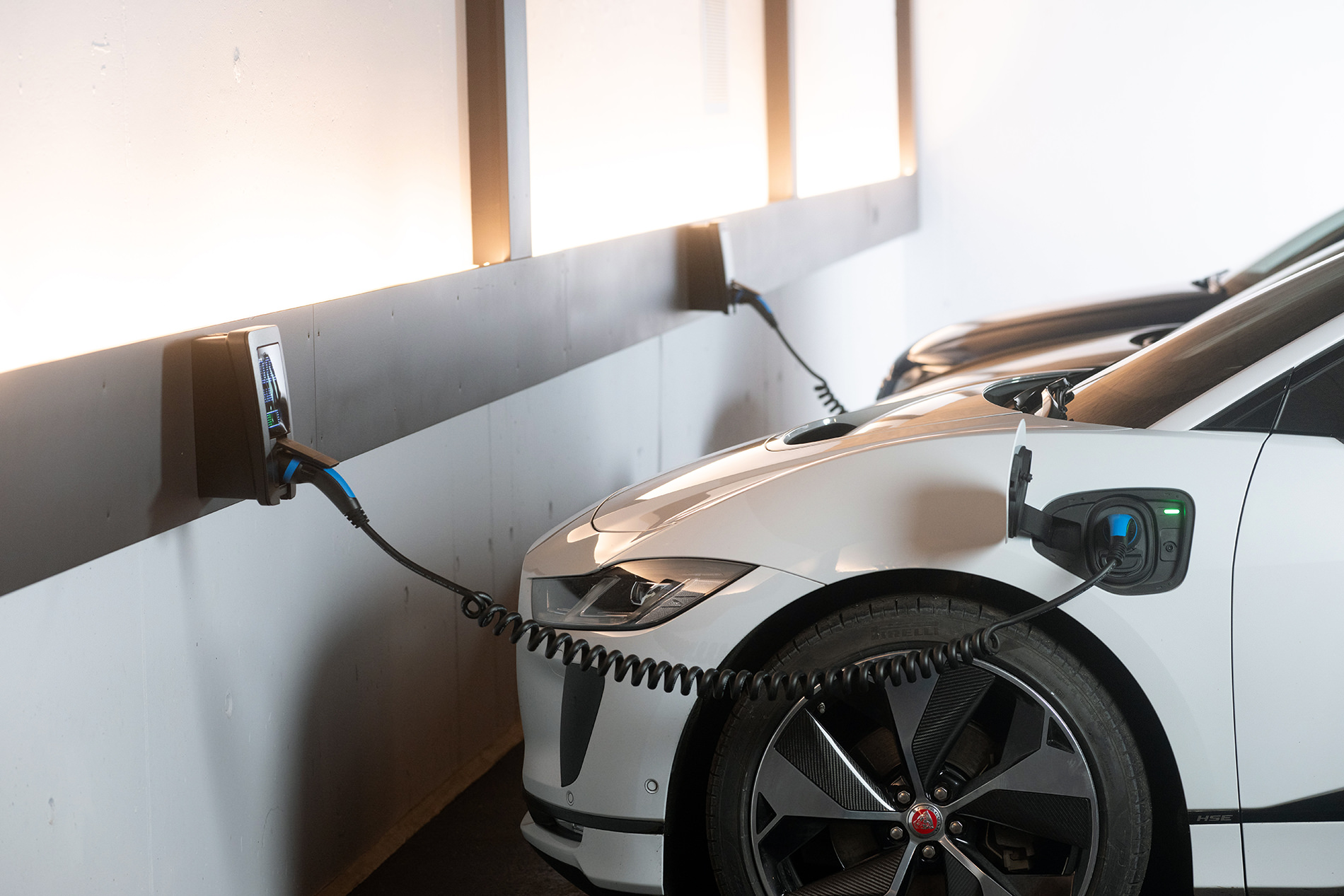
Most drivers do not want charging to become another activity they have to actively manage. They want the vehicle to charge while it is already parked at home, at work, at a fleet depot, or at another destination.
For a resident in an apartment community, that may mean plugging in after work and leaving the vehicle parked overnight.
For a fleet operator, it may mean knowing vehicles will receive the energy they need before their next shift.
For a dealership, it may mean keeping vehicles sufficiently charged without constantly managing which vehicle is connected to which charger.
The operating environments differ, but the expectation is similar: charging should be predictable enough that users don’t have to plan around the infrastructure itself.
Reliability Is Bigger Than Charger Uptime
When people talk about reliable EV charging, the conversation often starts with whether a charger is online and functioning. That matters, but it is only one part of the experience.
A charger can technically be operational while the broader infrastructure still fails to deliver what users need. A property may have plenty of charging ports but limited electrical capacity behind them. One part of the site may have unused capacity while another is constrained. Vehicles may be plugged in, but power may not be reaching them as effectively as it could.
Those challenges become more pronounced at larger sites. A setup serving 10 vehicles may behave very differently when it needs to support 50. As you add more chargers, panel capacity, transformer capacity, dedicated circuits, and utility service constraints matter more.
At that point, reliability and scalability become closely connected. The question is no longer just whether an individual charger works, but whether the site can continue serving more vehicles within its electrical constraints.
Can available capacity reach the vehicles that need it? Can the property support more charging without repeatedly redesigning the infrastructure behind it?
If drivers regularly have to move vehicles, retry charging sessions, search for another charger, or change schedules because the site cannot consistently meet their needs, the problem becomes operational as well as technical. Reliability, in other words, is not only about preventing failures. It is also about designing infrastructure that can keep performing as needs change.
The Tension Between Innovation and Reliability
The challenge is that reliability can sometimes seem at odds with innovation. New technologies have quirks. Even widely adopted standards can have different implementations and configurations, so systems don’t always interact as expected.
An XKCD comic by Randall Munroe captures the problem well. Faced with 14 competing standards, someone proposes creating one universal standard to replace them. The result: 15 competing standards.
Anyone who has spent enough time around technology has probably encountered some version of that problem. EV charging faces a similar challenge. The industry needs new approaches to solve emerging problems, but new cannot be the objective by itself.
The question is whether innovation solves a meaningful problem while remaining reliable, scalable, and practical to deploy. That is a harder standard than simply asking whether a technology works.
It has to work in real buildings, with real electrical constraints, across different chargers, vehicles, networks, and operating environments. Ideally, it should also make charging easier to manage, not more complicated.
Good, Fast or Cheap?
An old engineering axiom says something can be good, fast, or cheap. Pick two. At times, EV charging deployment can feel heavily focused on fast and cheap. How quickly can chargers be installed? How low can the upfront cost go? Those are important considerations. But they don’t tell the whole story.
A charging system that costs less to install but performs poorly over its lifetime may not ultimately be the lower-cost solution. Likewise, installing more charging ports quickly does little if the electrical infrastructure behind them cannot support their use effectively.
There is also an important distinction between cost and value. The lowest-cost equipment or installation may reduce initial spending, but long-term value depends on what the site can actually support. Can it serve more vehicles over time? Can it make better use of existing electrical capacity? Can it reduce how often a property has to revisit major infrastructure decisions?
As EV charging becomes a more permanent part of buildings and transportation infrastructure, those questions matter more. Success cannot be measured only by how many chargers were installed or how quickly they went into the ground. It also depends on whether that infrastructure continues to meet the needs of the people relying on it.
What We Took Away From FORTH Roadmap
One of the things Roadmap reinforced for our team is that skepticism and innovation are not necessarily opposites.
Utilities should ask whether new technology is reliable. Property owners should ask whether it can scale. Fleet operators should ask whether vehicles will receive the energy they need when they need it. Drivers should expect charging to work without having to understand everything happening behind the scenes. Those are reasonable expectations.
At the same time, meeting future charging needs will require the industry to rethink how infrastructure has traditionally been designed.
For Positron, that means focusing not only on the charger, but on the electrical architecture behind it. Positron’s power distribution architecture dynamically routes available electrical capacity across connected Level 2 chargers based on where power is needed. The goal is not to make one vehicle charge faster. It is to help properties use the capacity they already have more effectively across multiple vehicles.
Ultimately, reliable EV charging should not require drivers to think about electrical capacity, communications protocols, power distribution, or what is happening behind the wall.
They should be able to plug in, walk away, and trust the system to do its job. As EV charging becomes part of everyday infrastructure, that kind of reliability will not be a bonus. It will be the expectation.